


Explore stop loss in trading ideas. Learn what a stop-loss is, how it works in trading, its benefits, types and associated risks.
- What Is a Stop-Loss?
- Why Every Trader and Investor Should Use a Stop-Loss
- How a Stop-Loss Order Works
- Stop-Loss in Trading Ideas: Three Numbers, One Page
- What You See on the Idea Details Page
- How a Trading Idea Ends
- A Worked Example with Numbers
- Two Common Types of Stop-Loss
- Does a Stop-Loss Always Execute at the Exact Price?
- How to Choose the Right Stop-Loss Level
- Mistakes to Avoid
- Conclusion
- FAQs
Ever bought a share, watched it slip, and told yourself, “It will bounce back soon”? Then it slipped again, and your calm plan turned into a nervous guessing game. Most of us have been there.
One way to manage this risk is to decide your exit before you enter. Plan your entry. Protect your downside. Never trade without an exit strategy. Stop loss in Trading Ideas helps you do just that. When it comes built into Trading Ideas on the Paytm Money app, you do not even have to work the number out yourself. It is prepared by a SEBI-registered research analyst. Let us break it down.
What Is a Stop-Loss?
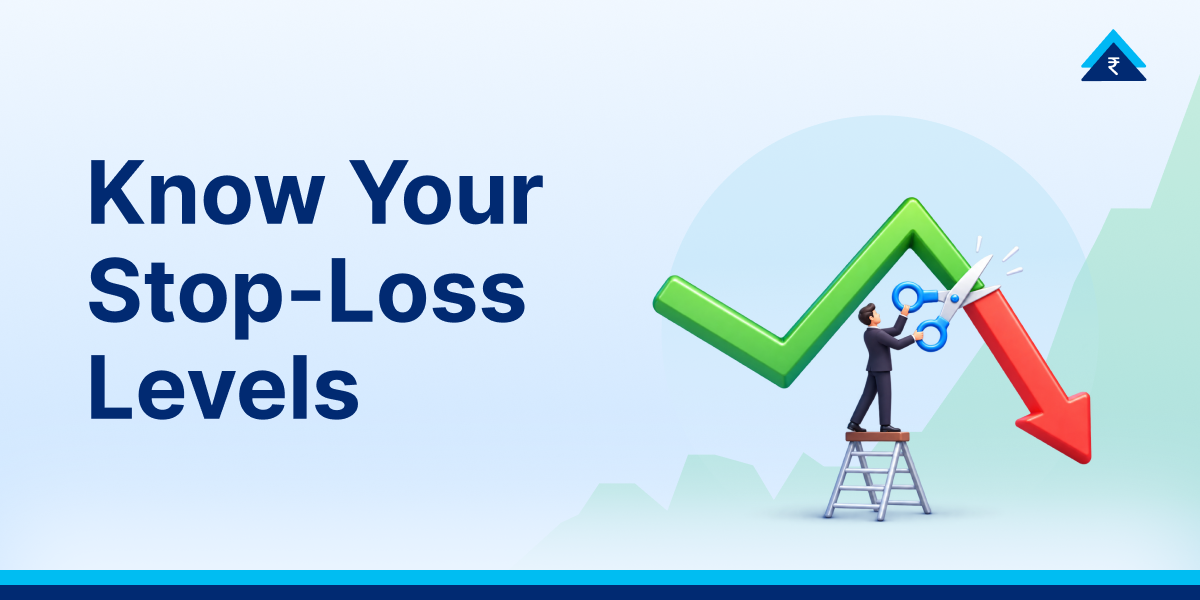
A stop-loss is a key part of a trading plan. It helps manage potential losses when a trade moves against expectations. In a buy trade, it is an instruction to sell a stock if its price falls to a pre-set level, helping limit the loss on the trade.
Example: Trading without a stop-loss is like driving on a highway without brakes. You buy a stock at ₹500 and set a stop-loss at ₹470. If the price falls to ₹470, a sell order is triggered, limiting your loss to around ₹30 per share, or 6%. Just as brakes help you control a car when danger strikes, a stop-loss helps manage potential losses if the trade moves against you.
Why Every Trader and Investor Should Use a Stop-Loss
- Helps manage downside risk: A stop-loss sets a planned exit level, although slippage can result in a larger loss.
- Cuts out emotion: The exit is planned, so panic has less room.
- Helps manage risk: A planned exit can help you manage potential losses and preserve capital.
- Saves time: You need not watch the screen all day, even when on holiday.
- Suits fast markets: It helps risk-averse investors and intraday traders most, as prices can swing sharply.
How a Stop-Loss Order Works
- Pick the stock you want to protect.
- Set a stop price you are comfortable with.
- The order stays dormant while the price stays above that level.
- Once the price touches it, the order becomes a market order and the stock is sold.
For stop-loss orders with separate trigger and limit prices, the trigger activates the order when the specified price is reached, while the limit price sets the acceptable execution price. Order types and availability vary by broker, so check the applicable order conditions.
| Item | Example (XYZ stock) |
|---|---|
| Current market price | ₹400 |
| Stop-loss price | ₹350 |
| Trigger price | ₹352 to ₹355 |
| Result | Sell order activates near ₹350 |
Important: This example assumes a sell stop-loss limit order. The trigger price and limit price are distinct. Execution is not guaranteed, and the exact order mechanics should be checked against the broker’s order type.
Note: All prices, stocks and figures are shown for illustrative purposes only. They are not recommendations to buy, sell or hold any security.
Stop-Loss in Trading Ideas: Three Numbers, One Page
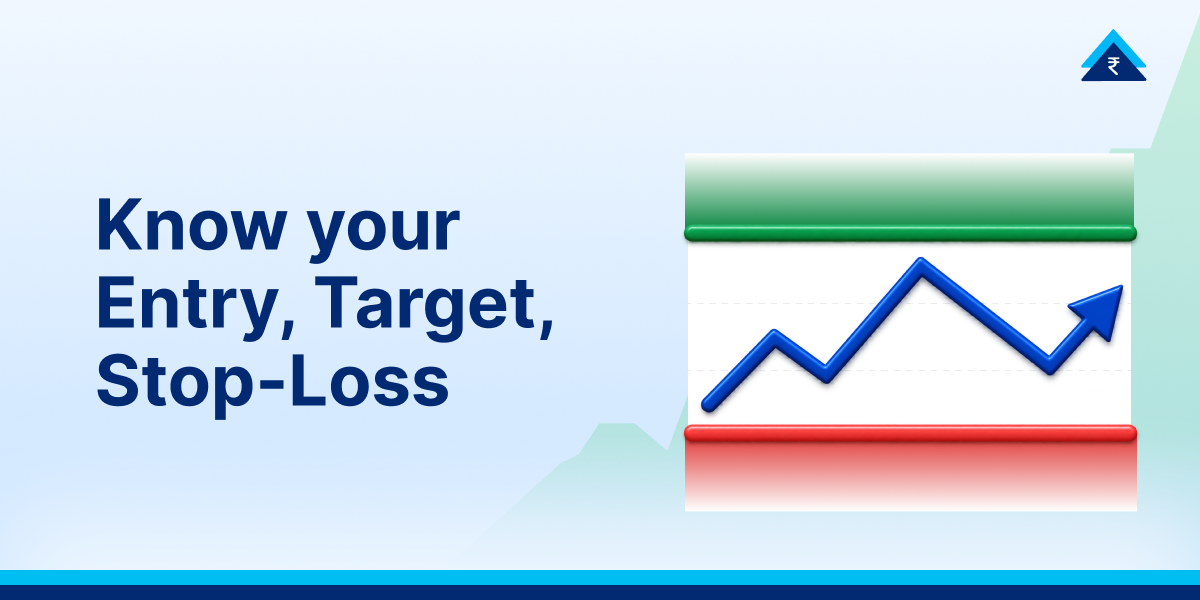
Every Trading Idea is built on three levels. Together they form a complete plan.
| Level | Meaning |
|---|---|
| Entry price | Where you open the trade |
| Target price | Where you plan to book profit |
| Stop-loss | Where you cap your loss |
Each idea also shows the call duration, the risk-reward ratio and a short reason behind the call. These levels form part of the research analyst’s trade setup, alongside the call duration, risk-reward ratio and rationale.
What You See on the Idea Details Page
- The stock name and the research analyst
- The analyst’s rating out of 5
- A “Target Left” indicator showing the remaining upside
- A timestamp showing the last update
- A visual bar with the stop-loss on the left, the entry price in the middle, the live last traded price (LTP) beside it, and the target on the right
That bar lets you see at a glance how close the price is to danger or to reward. You can also open the analyst’s profile to check active calls, recently closed ideas and overall rating, so you judge consistency, not a single call.
How a Trading Idea Ends
An idea stays live until one of three things happens:
- The target is achieved
- The stop-loss is triggered
- The position is reviewed and closed after the set period
A Worked Example with Numbers
Suppose a trading idea suggests the following:
| Detail | Value |
|---|---|
| Entry price | ₹1,500 |
| Stop-loss | ₹1,440 |
| Target price | ₹1,680 |
| Risk per share | ₹60 |
| Reward per share | ₹180 |
| Risk-reward ratio | 1:3 |
| Shares bought | 100 |
| Maximum loss | ₹6,000 |
| Potential gain | ₹18,000 |
In this example, the planned risk is ₹60 per share against a potential gain of ₹180 per share, giving a 1:3 risk-reward ratio before charges and slippage. The ratio does not guarantee profitability. Without a stop-loss, the same trade could hurt far more.
Note: All prices, stocks and figures are shown for illustrative purposes only. They are not recommendations to buy, sell or hold any security.
Two Common Types of Stop-Loss
- Fixed stop-loss: The stop-loss remains at the initially specified level. For example, a stock bought at ₹1,000 with a stop-loss at ₹900 has a planned price difference of ₹100 per share. The actual loss may differ depending on execution.
- Trailing stop-loss: The level moves up as the price rises. If the stock climbs to ₹1,100 and you trail by ₹50, your stop-loss rises to ₹1,050. If the price continues to rise, the trailing stop-loss may move upwards accordingly. If the stop-loss is triggered, the order’s execution price may differ from the trigger level, so a profit is not guaranteed.
Note: All prices, stocks and figures are shown for illustrative purposes only. They are not recommendations to buy, sell or hold any security.
Does a Stop-Loss Always Execute at the Exact Price?
Not always. Once triggered, the order sells at the next available price. This gap is called slippage.
- Stop-loss at ₹480, next price ₹479: shares sell at ₹479.
- Stop-loss at ₹350, a quick fall: shares may sell at ₹348 or ₹347.
Even in normal market conditions, the execution price may differ from the stop-loss level. During sharp price movements or market gaps, slippage can be greater, resulting in a larger-than-planned loss.
Note: All prices, stocks and figures are shown for illustrative purposes only. They are not recommendations to buy, sell or hold any security.
How to Choose the Right Stop-Loss Level
There is no perfect number for everyone. Think about:
- Risk appetite: Decide your maximum loss before you enter.
- Volatility: Jumpy stocks need wider stops, or they trigger too soon.
- Support levels: Many traders place stops just below a key support zone.
- Time horizon: Intraday trades suit tighter stops, while long-term holding allows more room.
- Distance: Avoid placing it too close, as normal price wobbles may trigger it.
- Position size: Position size and stop-loss distance should be considered together when estimating potential losses. A wider stop may require a smaller position to keep the planned monetary risk unchanged.
Mistakes to Avoid
- Ignoring the stop-loss: Planning an exit and then skipping it defeats the purpose.
- Moving it lower in hope: This turns a small loss into a large one.
- Setting it too tight: Everyday movement can knock you out of a good trade.
- Overlooking leverage: Eligible equity ideas can use the Margin Trading Facility (MTF), which allows larger positions with the same capital. That can lift gains, but it can magnify losses equally, so discipline matters even more.
Conclusion
A stop-loss will not predict the market, and it will not guarantee profit. What it gives you is control. Know where you enter, where you aim to exit, and where you walk away. With trading ideas laying out all three levels clearly, following a stop-loss becomes a habit instead of a struggle. Decide your exit first, and the rest of the trade feels calmer.
Disclaimer: Investments in the securities market are subject to market risks, read all the related documents carefully before investing. Registration granted by SEBI, enlistment with BSE and certification from NISM in no way guarantee performance of the Research Analyst or provide any assurance of returns to investors. Paytm Money Limited is a distributor for Non-Broking Products/Services such as Mutual Funds and SIP any other third-party products/ services.
All disputes with respect to the distribution activity, would not have access to SCORES/ ODR, Exchange investor redressal forum or Arbitration mechanism. SEBI Reg No. Broking – INZ000240532; Depository Participant – IN – DP – 416 – 2019, Depository Participant Number: CDSL – 12088800. Trading and clearing members of: NSE (90165, M52073), BSE (6707), MCX (57525), NCDEX (1315, M51110), MSEI (85300). SEBI Reg. No. Research Analyst – INH000020086. Regd Office: 136, 1st Floor, Devika Tower, Nehru Place, Delhi – 110019. For complete Terms & Conditions and Disclaimers visit https://www.paytmmoney.com