


If you have ever invested in mutual funds or are planning to start, chances are you have noticed the direct vs regular mutual fund option when choosing how to invest. At first glance, they look identical. They invest in the same companies, are managed by the same fund manager, and follow the same investment strategy. Yet, the difference between them can quietly impact your long-term returns.
- Understanding Direct and Regular Mutual Fund Plans
- Direct Mutual Fund Plan
- Regular Mutual Fund Plan
- Why SEBI Allows Both Direct and Regular Plans
- Direct vs Regular Mutual Funds: Key Differences at a Glance
- Why Expense Ratio Matters More Than You Think
- Example
- The Ice Cream Analogy: A Simple Way to Understand
- Who Should Choose Direct Mutual Funds
- How Paytm Money Direct Mutual Funds Make a Difference
- Charges on Paytm Money Direct Mutual Funds
- Additional Benefits for Investors
- Can You Switch from Regular to Direct Plans
- SIPs Work the Same in Both Plans
- Conclusion: Which Option Helps You Grow More
- FAQs
Choosing between direct and regular mutual funds is not about right or wrong. It is about understanding costs, control, and how involved you want to be in managing your investments. With platforms like Paytm Money, more investors are switching to direct plans to keep costs low and help their investments grow faster.
Understanding Direct and Regular Mutual Fund Plans
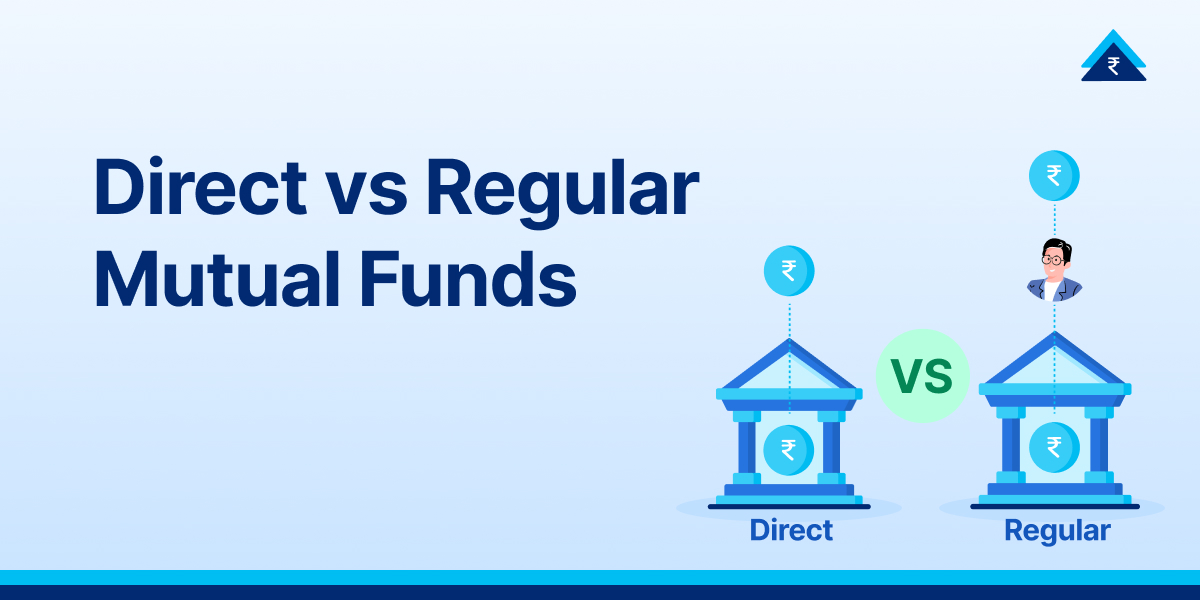
Mutual fund houses offer two variants of the same scheme. Both plans invest in the same portfolio and are managed in the same way. The difference lies purely in cost and mode of access.
Direct Mutual Fund Plan
A direct mutual fund plan allows you to invest directly with the Asset Management Company through its website or a digital investment platform. Since no intermediary is involved, there is no distributor commission. This results in a lower expense ratio.
Regular Mutual Fund Plan
A regular mutual fund plan is purchased through a distributor such as a mutual fund agent, bank, or financial advisor. The distributor earns a commission, which is included in the fund’s expense ratio and adjusted in the Net Asset Value.
(Source: Kotak Mutual Fund, UTI Mutual Fund)
Why SEBI Allows Both Direct and Regular Plans
The Securities and Exchange Board of India introduced direct plans to improve transparency and give investors a clear choice. Some investors are confident enough to invest independently, while others prefer guidance and execution support.
- Direct plans suit investors who are comfortable managing their investments
- Regular plans suit investors who value handholding and advisory support
This dual structure ensures flexibility for investors across experience levels.
(Source: UTI Mutual Fund)
Direct vs Regular Mutual Funds: Key Differences at a Glance
| Feature | Direct Mutual Fund Plan | Regular Mutual Fund Plan |
|---|---|---|
| Expense Ratio | Lower, as no distributor commission is charged | Higher, as distributor commission is included |
| Impact on Returns | Higher long-term return potential due to lower costs | Returns may be slightly lower due to higher expenses |
| Net Asset Value (NAV) | Usually higher over time because of lower expenses | Relatively lower due to added costs |
| Role of Intermediary | No intermediary involved | Distributor or bank facilitates the investment |
| Investment Experience | Investor manages selection and tracking independently | Distributor assists with selection and execution |
| Best Suited For | Confident, digital-first, and DIY investors | Investors who prefer guidance and support |
(Source: SEBI)
Why Expense Ratio Matters More Than You Think
The expense ratio represents the cost charged by the mutual fund to manage your money. Even a small difference can have a meaningful impact over long investment periods.
Since direct mutual funds do not pay commissions, their expense ratio is lower. Over 10 to 20 years, this cost saving compounds, leading to a higher final corpus. This is why direct plans often show better long-term returns compared to regular plans of the same scheme. It is important to note that higher NAV in a direct plan does not mean better fund performance. It simply reflects lower costs.
Example
Assume you invest ₹1,00,000 in a mutual fund that delivers an annual return of 10 percent. Under a regular plan, a higher expense ratio of 1.5 percent brings the net return down to about 8.5 percent.
With a direct plan, where the expense ratio is lower at 0.5 percent, the net return improves to roughly 9.5 percent. Over a 10-year period, this small cost difference can lead to a noticeable gap in final wealth because of compounding.
- Initial Investment: ₹1,00,000 (One-time Lumpsum)
- Market Return (Gross): 10% per year
- Comparison Period: 10 Years and 20 Years
| Investment Detail | Regular Plan (1.5% Expense) | Direct Plan (0.5% Expense) | The Difference (Loss) |
|---|---|---|---|
| Net Annual Return | 8.5% | 9.5% | 1% per year |
| Value after 10 Years | ₹2,26,098 | ₹2,47,823 | ₹21,725 |
| Value after 20 Years | ₹5,11,205 | ₹6,14,161 | ₹1,02,956 |
(Source: SEBI, UTI Mutual Fund)
The Ice Cream Analogy: A Simple Way to Understand
Think of buying ice cream.
If you order it through a delivery app, you pay extra for convenience. If you walk into the store yourself, you avoid delivery charges.
- Regular mutual funds are like ordering through an app. You pay for convenience and assistance.
- Direct mutual funds are like walking into the store yourself. You avoid extra charges and pay only for the product.
The ice cream remains the same. Only the cost changes.
Who Should Choose Direct Mutual Funds
Direct mutual funds are suitable for investors who:
- Are comfortable researching mutual fund schemes
- Can track portfolio performance periodically
- Prefer managing investments online
- Want to reduce long-term costs
- Have a long-term investment horizon
Even beginners can consider direct plans if they start with simpler categories like index funds or large-cap funds.
(Source: Kotak Mutual Fund, UTI Mutual Fund)
How Paytm Money Direct Mutual Funds Make a Difference
Paytm Money makes direct mutual fund investing simple, transparent, and cost-efficient for investors who want to maximise returns without paying unnecessary charges. By offering zero commission direct mutual funds, the platform ensures that a higher portion of your money stays invested and compounds over time.
Charges on Paytm Money Direct Mutual Funds
| Charges | Rate (Excluding GST) |
|---|---|
| Account Opening | ₹0 |
| Brokerage Charges | ₹0 |
| Commission | Direct Mutual Funds with 0 percent commission |
| Transaction Fees | No transaction fee on investments and withdrawals |
With no brokerage, no commissions, and zero transaction fees, Paytm Money helps investors avoid costs that can reduce long-term mutual fund returns.
Additional Benefits for Investors
- Access to direct mutual fund plans across leading fund houses
- Zero commission on both investments and withdrawals
- Free risk profiling to help investors choose suitable funds
- Detailed portfolio tracking and performance statements
- Easy SIP setup and management through a digital platform
Can You Switch from Regular to Direct Plans
Yes, investors can switch from a regular plan to a direct plan of the same scheme. However, this switch is treated as a redemption and fresh investment.
This means:
- Capital gains tax may apply based on holding period
- Exit load may be charged if the fund has one
It is advisable to review tax implications before switching, especially for long-held investments.
(Source: Clear Tax)
SIPs Work the Same in Both Plans
Both direct and regular mutual funds support Systematic Investment Plans. The SIP amount, frequency, and investment discipline remain the same. The only difference is cost. Over long periods, SIPs in direct plans often generate a slightly higher corpus due to lower expenses. Investors can also use the Paytm Money SIP calculator to estimate potential returns and understand how lower costs in direct plans can impact long-term wealth creation.
Conclusion: Which Option Helps You Grow More
Direct and regular mutual funds may look identical on the surface, but the way they impact your long-term wealth can be very different. While both follow the same investment strategy, the presence or absence of commissions plays a quiet yet powerful role in shaping returns over time.
With platforms like Paytm Money offering zero commission direct mutual funds, investors now have an easy and transparent way to invest directly and retain more of their money. The right choice depends on your confidence, knowledge, and willingness to manage investments independently.
Disclaimer: Investments in the securities market are subject to market risks, read all the related documents carefully before investing. This content is purely for information purpose only and in no way to be considered as an advice or recommendation. The securities are quoted as an example and not as a recommendation.
Investors are requested to do their own due diligence before investing. Paytm Money Ltd SEBI Reg No. Broking – INZ000240532, Depository Participant – IN – DP – 416 – 2019, Depository Participant Number: CDSL – 12088800, NSE (90165), BSE (6707) Regd Office: 136, 1st Floor, Devika Tower, Nehru Place, Delhi – 110019. For complete Terms & Conditions and Disclaimers visit: https://www.paytmmoney.com/stocks/policies/terms .