

Picture this. You have parked your money in a mutual fund, watched it grow nicely over a few months, and one fine morning you decide to pull it out. You expect the full amount to land in your bank account, but a small slice quietly goes missing. That slice is the exit load in mutual funds, and it is one of the most overlooked costs investors face.
Mutual funds have become a favourite route for people who want to grow their wealth without picking individual stocks themselves. Yet, like every financial product, they carry rules and charges that are easy to skip over. The exit load sits right at the top of that list. So let us walk through what it is, how it works, and how you can avoid paying more than you really need to.
What Is Exit Load?
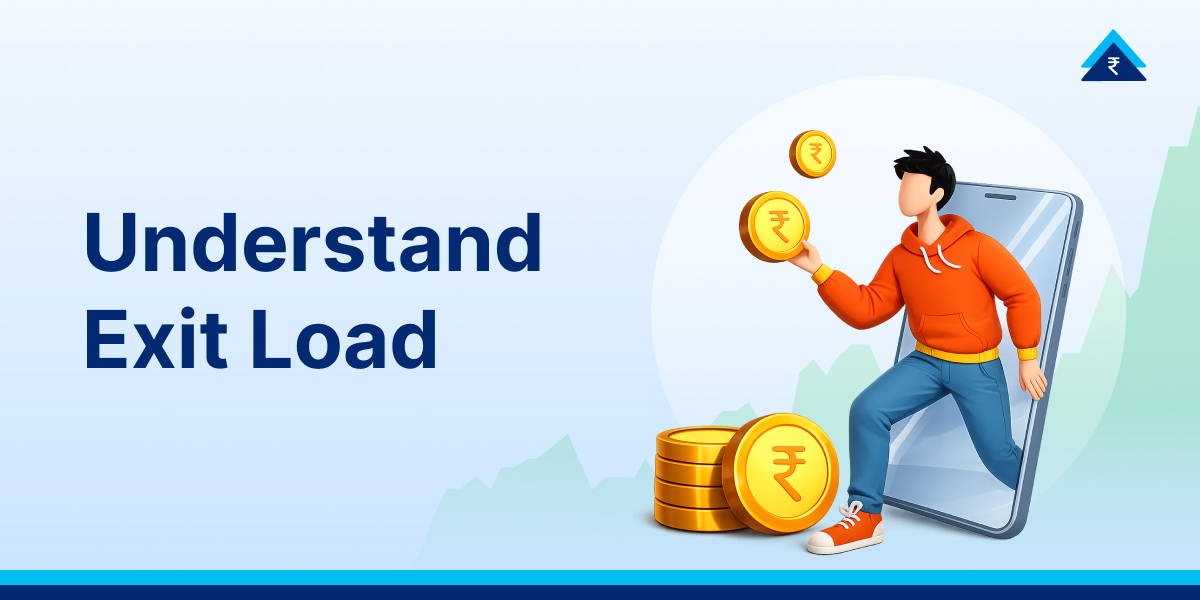
An exit load is a fee that a mutual fund house charges when you redeem or sell your units before a set period. It is shown as a percentage of the redemption value, and its main purpose is to discourage short-term trading in mutual funds.
In plain terms, the fund wants you to stay invested for the time horizon it was designed for. When you leave early, the exit load acts as a gentle nudge to reconsider. This keeps the pooled money stable and gives the fund manager the room to invest with a longer view in mind.
How Does Exit Load Work?
When you ask to redeem your units, the fund house works out the applicable exit load using two things: the redemption amount and the date on which you redeem.
Here are the key points worth remembering:
- Different funds follow different exit load rules. Equity funds may charge a load on redemptions within one year, while many debt funds have shorter windows or none at all.
- Exit loads discourage frequent buying and selling, nudging you towards staying invested for the long term.
- A stable asset base helps fund managers plan their investments without scrambling to sell holdings.
- Fewer short-term redemptions mean the portfolio stays steady, which benefits everyone who remains invested.
- Some funds reduce the load over time. For example, it might be 1% for redemption within 6 months and 0.5% for redemption within 1 year.
- Some schemes, such as liquid funds, often charge no exit load at all because they are meant for very short stays.
Example of Exit Load Calculation
A simple example makes the maths clear.
Suppose an investor buys units of an equity mutual fund on January 1, 2024 worth ₹1,00,000. The fund charges a 1% exit load if the units are redeemed within one year.
If the investor redeems on June 30, 2024, and the value has grown to ₹1,05,000, the exit load works out to 1% of ₹1,05,000, which comes to ₹1,050. The table below shows how the net amount is arrived at.
| Detail | Amount |
|---|---|
| Investment on January 1, 2024 | ₹1,00,000 |
| Redemption value on June 30, 2024 | ₹1,05,000 |
| Exit load (1% of ₹1,05,000) | ₹1,050 |
| Net pay-out | ₹1,03,950 |
If instead the investor waits and redeems on January 2, 2025, which is just after one full year, there is no exit load. The entire redemption amount is paid out in full.
(Source: SEBI)
Types of Mutual Funds and Exit Load
Exit load rules change from one fund type to another, and even from one scheme to another within the same category. The table below sums up the common patterns, though the exact figures will always depend on the specific scheme.
| Fund type | Typical exit load pattern |
|---|---|
| Equity mutual funds | Often charge a load if redeemed within 12 months; commonly 0.5% to 1% for early exits (varies by scheme) |
| Debt mutual funds | Lower loads or shorter windows, often around 3 to 6 months; some charge little or nothing after a short period (varies by scheme) |
| Liquid funds | May apply graded charges for very short holding periods, commonly up to 7 days (varies by scheme) |
| Overnight funds | Generally no exit load, as they are meant for ultra-short parking of money |
| Hybrid funds | Depends on the asset mix; higher equity exposure often mirrors equity fund patterns (varies by scheme) |
Keep one thing in mind. Not every scheme charges an exit load, and the exact percentage, the time window, and whether it is graded or flat will all differ. The safest move is to read the scheme’s Scheme Information Document (SID) before you invest, so you know what to expect.
Why Do Mutual Funds Charge Exit Load?
There are a few practical reasons behind this fee:
- Encouraging long-term investing: Funds are built to deliver returns over a set horizon. Exit loads discourage the in-and-out behaviour that can hurt long-term performance.
- Maintaining fund stability: Large, sudden redemptions force managers to reshuffle holdings or hold more cash, both of which can dilute returns for those who stay invested.
- Covering redemption costs: Buying and selling securities carries transaction and liquidity costs. Exit loads help offset these so the burden does not fall unfairly on remaining investors.
Benefits of Understanding Exit Load in Mutual Funds
Knowing how the exit load works helps you invest with more confidence. The main benefits include:
- Making informed decisions: Line up your redemptions with the exit-load schedule so you do not pay charges you could easily have avoided.
- Avoiding unnecessary charges: Withdrawing after the exit-load window keeps more of your returns in your own pocket.
- Building discipline: The fee gently pushes you to stay invested long enough to give your money a fair chance to grow.
- Judging fund suitability: If you need frequent access to your money, lean towards schemes with little or no exit load. For long-term goals, a short-term exit load may not be a problem at all.
Conclusion
The exit load in mutual funds is a small cost that can quietly chip away at your returns if you ignore it. While it adds to the expense of leaving early, it exists for good reason. It protects the fund and its committed investors by discouraging short-term churn and helping to offset redemption-related expenses.
Before you invest or redeem, take a few minutes to read the fund’s Scheme Information Document so you understand the exit load structure and can plan your liquidity around it. A well-informed investor simply makes better choices. If you would like help choosing funds that match your time horizon and liquidity needs, Paytm Money is there to guide you.
Disclaimer: Investments in the securities market are subject to market risks. Read all the related documents carefully before investing. This content is purely for informational purposes only and should not be considered as investment advice or a recommendation. Securities quoted are for illustration purposes only and not recommendatory. Investors are requested to do their own due diligence before investing.
Paytm Money Ltd. SEBI Reg. No. Broking – INZ000240532; Depository Participant – IN – DP – 416 – 2019, Depository Participant Number: CDSL – 12088800. Trading and clearing member of NSE (90165, M52073), BSE (6707), MCX (57525), NCDEX (1315, M51110), and MSEI (85300). SEBI Reg. No. Research Analyst – INH000020086. Regd. Office: 136, 1st Floor, Devika Tower, Nehru Place, Delhi – 110019. For complete Terms & Conditions and Disclaimers visit: https://www.paytmmoney.com/stocks/policies/terms