

Have you ever bought an exchange-traded fund and wondered where those units actually come from? You tap “buy”, the trade settles in seconds, and you own a slice of an entire index. Simple enough on the surface. Yet underneath that smooth experience sits a clever, largely invisible machine.
- How ETFs Are Structured
- The Role of Authorised Participants
- The Creation Process Explained
- In-Kind Creation vs Cash Creation
- A Worked Example
- The Redemption Process Explained
- In-Kind Redemption vs Cash Redemption
- The Role of Arbitrage
- Why Creation and Redemption Matter
- How Mutual Funds Differ
- What This Means for Retail Investors
- Conclusion
- FAQs
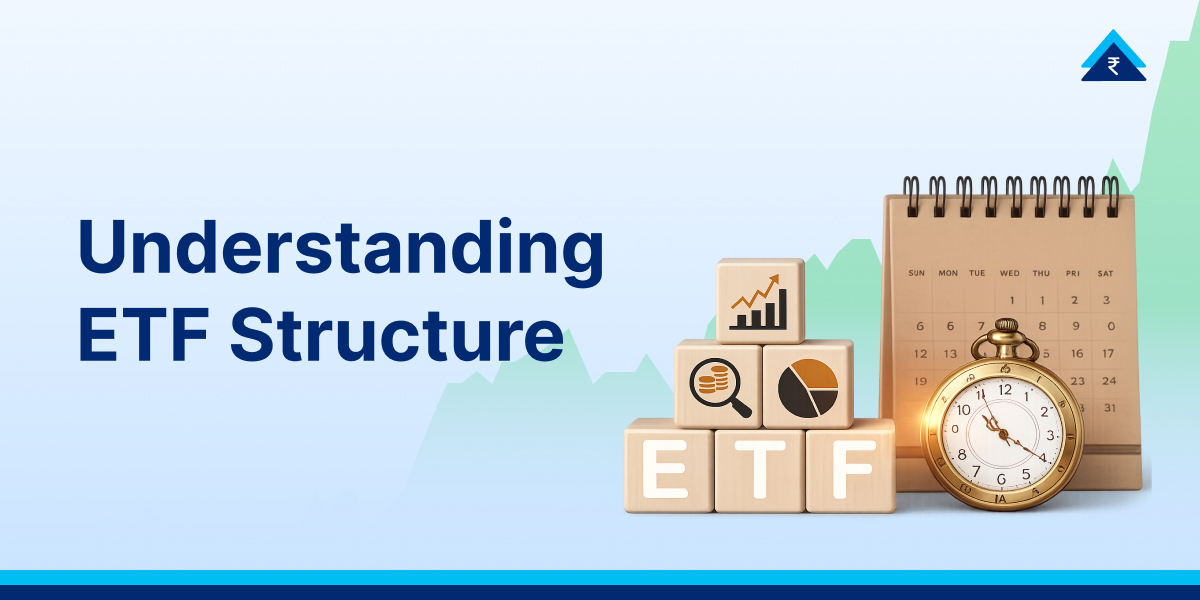
The ETF creation and redemption process is the engine that keeps everything running, and once you understand it, the way ETFs behave on the market suddenly makes a lot more sense. Let us pull back the curtain and walk through it together, step by step.
How ETFs Are Structured
ETFs (exchange-traded funds) are open-ended investment funds listed on stock exchanges. Unlike a traditional mutual fund, which prices just once at the end of the trading day, an ETF can be bought or sold throughout the session at live market prices, much like an ordinary share. What makes this possible is the way ETFs operate across two connected markets.
- Primary market: This is where new ETF units are created and existing ones are retired. Only Authorised Participants (APs) deal here, transacting directly with the ETF issuer or asset management company. The exchange usually happens “in kind”, meaning APs hand over baskets of the underlying securities to mint new units, or hand back units to receive securities.
- Secondary market: This is where everyday investors, both retail and institutional, buy and sell ETF units on the exchange just as they would individual stocks. These trades happen between investors rather than with the issuer, and prices move with supply and demand. Arbitrage, which we will come to shortly, keeps those prices anchored near fair value.
The Role of Authorised Participants
Authorised Participants are typically large financial institutions, banks or market makers contracted by the ETF issuer. They sit at the heart of the ETF creation and redemption process and carry out a few essential jobs.
- They are the only entities permitted to create or redeem ETF units in the primary market.
- When an ETF trades at a premium to its net asset value (NAV), APs buy the underlying securities, create fresh units and sell them for a profit, which nudges the price back towards NAV.
- By keeping units flowing onto and off the exchange, they maintain a healthy supply and help keep bid-ask spreads tight.
APs do not deal in odd lots. They transact in large blocks known as creation units, which are the smallest size of ETF shares that can be created or redeemed directly with the manager. These blocks are sizeable, usually somewhere between 25,000 and 100,000+ units. The scale keeps things efficient and allows the issuer to run the fund at a lower cost for everyone else.
The Creation Process Explained
Here is how new ETF units come into existence. Understanding this stage of the ETF creation and redemption process helps explain how ETFs maintain liquidity and keep market prices aligned with NAV.
- Demand for an ETF rises, pushing its market price above the value of the securities it holds (a premium).
- An AP spots that premium and recognises an opportunity to create new units.
- The AP buys the underlying stocks or bonds the ETF is designed to track, in the exact proportions the manager specifies.
- This “creation basket” of securities is delivered to the ETF issuer.
- In return, the issuer hands the AP a Creation Unit, a large block of brand-new ETF units.
- The AP sells those units into the open market, easing the premium and bringing the price back in line with NAV.
In-Kind Creation vs Cash Creation
The creation basket can reach the issuer in two ways. In-kind creation is the traditional and standard route: the AP delivers the actual securities. Because no securities are sold for cash, this tends to be more tax-efficient, as taxable capital gains are not triggered.
Cash creation is where the AP hands over cash and the issuer buys the securities itself. This is used when the underlying holdings are tricky to source, but it is generally less tax-efficient and can carry higher transaction costs or slippage.
A Worked Example
Imagine a hypothetical ETF tracking a “BFSI Top 10” index, trading at a premium to its NAV. Say one Creation Unit equals 50,000 ETF units. The manager publishes the creation basket, a list of 10 stocks in set proportions. The AP buys 50,000 units’ worth of those 10 stocks on the open market and delivers the bundle to the issuer.
The issuer accepts it and issues 50,000 new units in return. The AP then sells those 50,000 units on the exchange, profiting from the gap because it bought the stocks cheaply and sold the units at a premium. The ETF’s market price drifts back towards its true value, with no disruption to existing holders.
The Redemption Process Explained
Redemption is creation in reverse, and it too happens only in the primary market, in those same large blocks of roughly 25,000 to 100,000+ units.
- The AP gathers a large block of ETF units from the secondary market.
- It notifies the issuer that it wishes to redeem a Creation Unit.
- The AP transfers the block of units to the issuer.
- The issuer verifies the units.
- The issuer hands back the underlying securities (and occasionally a small cash component) from the fund’s portfolio.
- The returned units are cancelled, reducing the total number of units in circulation.
In-Kind Redemption vs Cash Redemption
In-kind redemption sees the AP return units and receive securities, which keeps things tax-efficient (no securities are sold for cash) and is the norm for most equity and fixed-income ETFs. Cash redemption pays the AP in cash equal to the value of the securities. It is more common in emerging or global markets, or for less liquid, specialised ETFs, but it can trigger capital gains within the fund and reduce efficiency.
For example, suppose an ETF tracking a US stock index trades at a slight discount to NAV. An AP buys 50,000 units cheaply from investors, returns them to the issuer, and receives a representative basket of stocks worth more than it paid. Selling those stocks locks in a profit, shrinks the supply of units, and lifts the ETF price back towards NAV.
The Role of Arbitrage
This self-correcting behaviour is arbitrage in action. When an ETF trades above NAV, APs create units and sell them, applying downward pressure on the premium. When it trades below NAV, APs buy the cheap units and redeem them, easing the discount. This constant push and pull is why ETF prices rarely stray far from the value of their holdings, which is especially valuable during periods of higher volatility.
Why Creation and Redemption Matter
| Benefit | What it means for you |
|---|---|
| Price stays near NAV | Arbitrage keeps the exchange price closely tracking the underlying portfolio. |
| Liquidity | APs can mint new units on demand, so an ETF liquidity is generally linked to the liquidity of its underlying holdings, even with low trading volume. |
| Cost efficiency | In-kind transfers let the fund avoid open-market trading costs and large cash reserves, supporting lower expense ratios. |
| Tax efficiency | In-kind transfers can improve operational efficiency and reduce portfolio turnover. In markets such as the US, they may also enhance tax efficiency |
Note: A key point in a mutual fund, one investor’s large redemption can force the fund to sell securities and trigger tax consequences for everyone. The in-kind mechanism shields long-term ETF holders from that.
How Mutual Funds Differ
- Mutual funds price once daily at NAV; ETFs trade continuously like shares.
- Mutual fund trades happen directly with the fund house; most ETF trades happen between investors, while APs deal with the issuer.
- Actively managed mutual funds often have higher expense ratios, while index mutual funds may have costs comparable to ETFs.
- Mutual funds allow fractional amounts; ETFs are bought in whole units and need a demat or brokerage account.
What This Means for Retail Investors
Can you, as an individual, create or redeem units directly? In short, no. The ETF creation and redemption process happens only in the primary market, exclusively between the issuer or AMC and the APs, and only in large blocks that demand serious capital. Retail investors buy and sell units in the secondary market through their brokers. Direct redemption with the AMC is reserved for extremely rare situations where liquidity is severely poor, and it is not the standard route.
According to NSE, ETF units are not sold to the public for cash. The AMC takes the index stocks from APs, large investors and institutions, plus a cash component for accumulated dividends, and issues a Creation Unit in exchange for this “Portfolio Deposit” and “Cash Component”. The number of outstanding units is not fixed; it expands and contracts with demand. This in-kind facility is precisely what keeps ETFs trading close to fair value and removes the premium or discount problem that troubles closed-end funds.
(Source: NSE)
Conclusion
The ETF creation and redemption process is the mechanism that keeps ETFs efficient, liquid, and closely aligned with their NAV. By enabling Authorised Participants (APs) to create or redeem units based on market demand, it supports price stability, reduces trading frictions, and enhances tax efficiency. Understanding this process helps investors better appreciate how ETFs function behind the scenes.
Disclaimer: Investments in the securities market are subject to market risks. Read all the related documents carefully before investing. This content is purely for informational purposes only and should not be considered as investment advice or a recommendation. Securities quoted are for illustration purposes only and not recommendatory. Investors are requested to do their own due diligence before investing.
Paytm Money Ltd. SEBI Reg. No. Broking – INZ000240532; Depository Participant – IN – DP – 416 – 2019, Depository Participant Number: CDSL – 12088800. Trading and clearing member of NSE (90165, M52073), BSE (6707), MCX (57525), NCDEX (1315, M51110), and MSEI (85300). SEBI Reg. No. Research Analyst – INH000020086. Regd. Office: 136, 1st Floor, Devika Tower, Nehru Place, Delhi – 110019. For complete Terms & Conditions and Disclaimers visit: https://www.paytmmoney.com/stocks/policies/terms