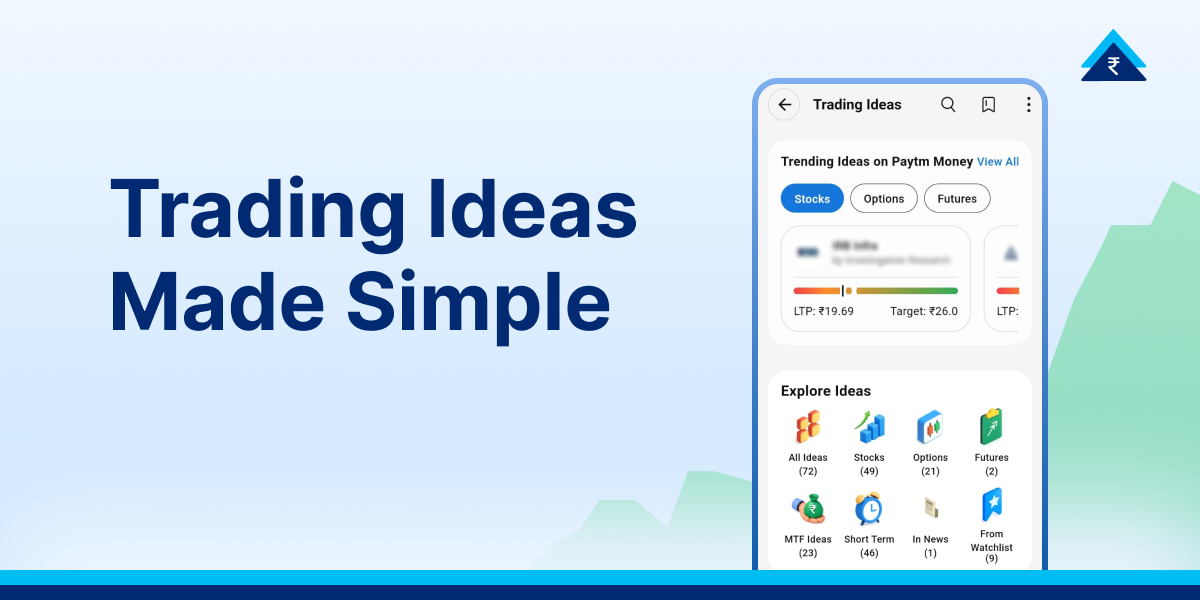


Ever stared at your trading screen, torn between buying now, waiting a little longer, or simply walking away? You are not alone. Most of us have felt that mix of excitement and hesitation the moment the market starts moving. This is exactly where trading calls step in. On Paytm Money, these trading calls form the heart of a wider offering called Trading Ideas, a set of research-backed opportunities curated by analysts.
- Where Trading Calls Fit In
- Equity Trading Calls
- 1. Intraday Trades
- 2. Alpha or Momentum Trades
- 3. Swing Trades
- 4. Short-Term Positional Calls
- 5. 11 AM Trade and Weekly Trade (T+5)
- 6. BTST (Buy Today, Sell Tomorrow)
- F&O Trading Calls
- 1. 11 AM Option
- 2. Expiry Option
- A Quick Word on MTF
- How to Choose the Right Trading Call
- Conclusion
- FAQs
Each trading call arrives as a ready-made game plan, complete with an entry price, a target to aim for, and a safety net in the shape of a stop loss. Instead of making a guess, you follow a clear structure. In this guide, we will walk through the different types of trading calls within Trading Ideas, explain what makes each one tick, and help you spot the style that suits you best.
Where Trading Calls Fit In
Before we dive in, it helps to see the bigger picture. Trading Ideas is the overall product on Paytm Money, and trading calls are the individual recommendations you act on inside it. Every genuine trading call spells out a handful of essentials: the entry price, the target, the stop loss, the expected holding duration, the risk reward ratio, and a short rationale.
That structure is the whole point. It turns a vague tip into a disciplined, trackable plan you can follow and review later. These trading calls broadly fall into two families. Equity calls involve buying and selling shares, while F&O calls use futures and options. Let us look at both.
Equity Trading Calls
1. Intraday Trades
These are same-day trading calls with a modest upside of roughly 1% to 2% and a risk reward framework of about 1:1.5. Positions are usually closed within the same session, though a strong mover may occasionally be carried forward as a short-term trade through revised parameters.
2. Alpha or Momentum Trades
Alpha Trades target a potential upside of 5% to 10% over a short window of T+3 to 15 trading days. These are high-conviction, research-backed trading calls that lean on momentum, breakout patterns, volume expansion, sector strength, and company triggers such as order wins, product launches, or regulatory approvals.
3. Swing Trades
Swing trades aim to catch meaningful market swings driven by momentum and reversals from demand zones. Once a trade gains 5%, you may book profits partly or fully any time after T+3. If neither target nor stop loss is hit, the position is generally reviewed and closed after 5 trading sessions.
4. Short-Term Positional Calls
These offer a wider upside of 5% to 15% over a horizon of 5 to 30 trading days. They suit traders who want a slice of a larger move without watching the screen all day. If untriggered, trades are typically reviewed within 15 sessions.
5. 11 AM Trade and Weekly Trade (T+5)
Both are high-conviction, MTF-enabled trading calls targeting an upside of 5% to 10%+ over roughly T+1 to T+5 trading days, with a risk reward ratio near 1:2. The 11 AM Trade is spotted during active market hours, while the Weekly Trade leans on sector leadership and weekly technical picks.
6. BTST (Buy Today, Sell Tomorrow)
BTST calls chase overnight momentum with a 1% to 2% upside and a 1:1.5 framework. They are usually published around 2:30 PM and closed by about 10:00 AM on the next trading day.
Here is a quick snapshot of the main equity trading calls:
| Trading Call | Upside Potential | Duration | Risk Reward Ratio |
|---|---|---|---|
| Intraday Trades | 1% to 2% | Intraday | 1:1.5 |
| Alpha / Momentum | 5% to 10%+ | T+3 to 15 trading days | 1:2 |
| Swing Trades | 5% to 10%+ | T+3 to 15 days | 1:2 |
| Short-Term Positional | 5% to 15% | 5 to 30 days | 1:2.5 |
| 11 AM Trade (T+5) | 5% to 10%+ | T+1 to T+5 | 1:2 |
| Weekly Trade (T+5) | 5% to 10%+ | T+1 to T+5 | 1:2 |
| BTST | 1% to 2% | Next day | 1:1.5 |
F&O Trading Calls
Futures and options trading calls use leverage, so the return potential is higher. The flip side is that the risk is higher too.
1. 11 AM Option
This options trading call targets a minimum upside of around 25%+, focusing on premiums usually priced below ₹25. That lower premium lets you take part with relatively modest capital, while the risk reward ratio is kept near 1:2.5. Holding periods range from intraday up to T+5 sessions.
2. Expiry Option
Built for expiry-day action, these intraday trading calls ride expiry volatility across eligible index and stock option contracts on both NSE and BSE. Depending on market conditions, opportunities may be identified across contracts such as Nifty, Sensex, and other eligible expiry instruments. The risk reward ratio stays around 1:2.5.
Other F&O trading calls include stock futures, index futures, stock options, index options, high-upside “Hero” options, and weekly and monthly expiry strategies.
| Trading Call | Upside Potential | Duration | Risk Reward Ratio |
|---|---|---|---|
| Stock Futures | 1% to 2% | Intraday to T+5 | 1:1.5 |
| Index Futures | 1% to 2% | Intraday to T+5 | 1:1.5 |
| Stock Options | 25%+ | Intraday to T+5 | 1:2.5 |
| Index Options | 10% | Intraday to T+5 | 1:1.5 |
| 11 AM Option (below ₹25) | 25%+ | Intraday to T+5 | 1:2.5 |
| Hero Options | 100% | Intraday to T+5 | 1:2.5 |
| Expiry Option (Index/Stock) | Volatility-led | Intraday | 1:2.5 |
A Quick Word on MTF
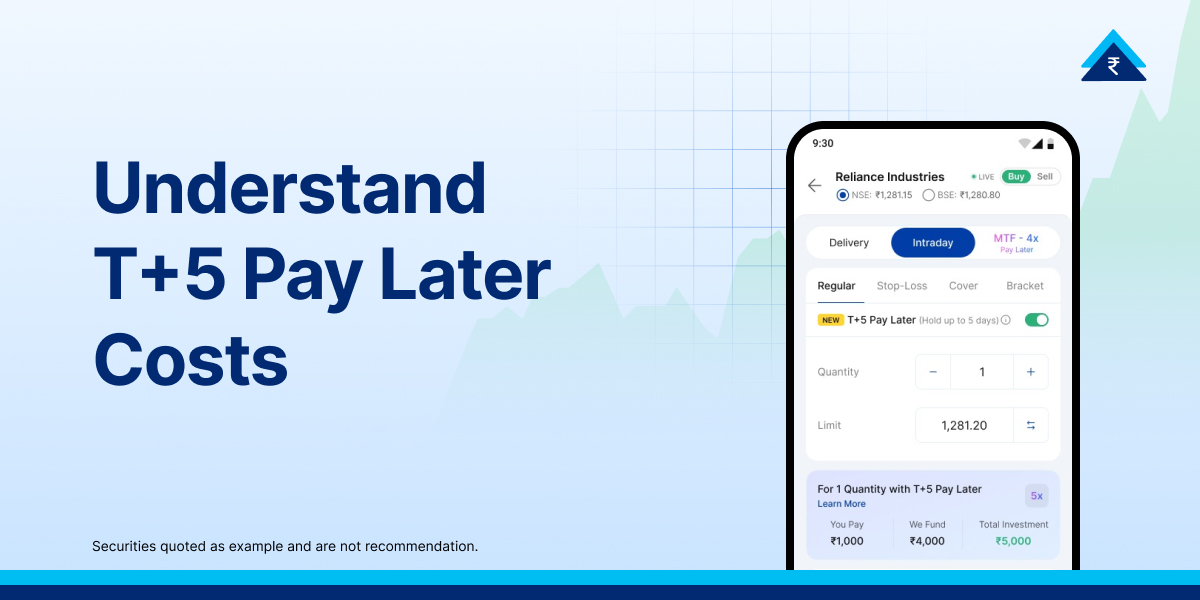
Many equity trading calls can be carried out using the Margin Trading Facility (MTF), which lets you take a larger position with the same capital. As an illustration, ₹10,000 without MTF might buy around 209 shares for a potential gain of ₹460. With 3x leverage through MTF, that same ₹10,000 could control roughly 627 shares, lifting the potential gain to about ₹1,379.
The catch is straightforward. Leverage magnifies gains and losses alike, so a strict stop loss matters even more. These figures are illustrative, and your actual returns depend on your own entry, your exit, and market conditions.
How to Choose the Right Trading Call
There is no single best pick. The right trading calls depend on your style, your available time, and your appetite for risk.
- Short on time? Positional and swing trading calls need far less monitoring.
- Love the fast lane? Intraday and expiry trading calls suit active screens.
- Comfortable with leverage? F&O and MTF trading calls can amplify outcomes, in both directions.
All of these trading calls are available under the free Trading Ideas feature on Paytm Money, where you can filter them by status, instrument, duration, or analyst, and track each one throughout its lifecycle. You can also monitor ideas in profit, view the remaining target potential (Target Left), follow preferred analysts, and stay updated with key market signals and news associated with each trading idea.
Once you find a trading call that matches your preference, you can review the entry price, target, stop loss, holding period, and analyst rationale before deciding whether to take the trade. As the trade progresses, you can continue tracking its performance until it is closed. Whichever route you take, the golden rules stay the same. Respect your stop loss, size your position sensibly, and never stake everything on a single call.
Conclusion
Trading calls will never remove market risk, but they do bring structure, transparency, and discipline to your decisions. As the building blocks of the free Trading Ideas feature on Paytm Money, they let you combine research-backed recommendations with your own analysis and sound risk management, helping you replace guesswork with a well-defined trading plan. The best trading call is not always the one with the highest return potential, but the one that matches your trading style, risk appetite, and ability to manage risk with discipline. And a plan, more often than not, is what separates a confident trader from an anxious one.
Disclaimer: Investments in the securities market are subject to market risks, read all the related documents carefully before investing. Registration granted by SEBI, enlistment with BSE and certification from NISM in no way guarantee performance of the Research Analyst or provide any assurance of returns to investors. Paytm Money Limited is a distributor for Non-Broking Products/Services such as Mutual Funds and SIP any other third-party products/ services.
All disputes with respect to the distribution activity, would not have access to SCORES/ ODR, Exchange investor redressal forum or Arbitration mechanism. SEBI Reg No. Broking – INZ000240532; Depository Participant – IN – DP – 416 – 2019, Depository Participant Number: CDSL – 12088800. Trading and clearing member of: NSE (90165, M52073), BSE (6707), MCX (57525), NCDEX (1315, M51110), MSEI (85300). SEBI Reg. No. Research Analyst – INH000020086. Regd Office: 136, 1st Floor, Devika Tower, Nehru Place, Delhi – 110019. For complete Terms & Conditions and Disclaimers visit https://www.paytmmoney.com