


Thinking about putting your money into an ETF? You’re definitely not alone. Investing in ETFs has quietly become one of the most popular investment choices in India, and for good reason. Exchange-traded funds are flexible, often cheaper than mutual funds, and let you trade them just like a stock. But here’s the thing: not all ETFs are created equal, and successful investing in ETFs takes a bit more thought than just clicking “buy”.
- 1. Measure the ETF’s Performance
- ETF Tracking Error Meaning
- 2. Understand the ETF’s Underlying Index
- Types of ETFs in India
- 3. Consider the ETF Structure
- 4. Know When and How to Trade
- ETF Liquidity and Trading Volume
- Difference Between ETF and Mutual Fund
- 5. Understand the Total Cost
- ETF Expense Ratio Explained
- Transaction Costs
- ETF Taxation in India
- ETF vs Index Fund Comparison
- Conclusion
- FAQs
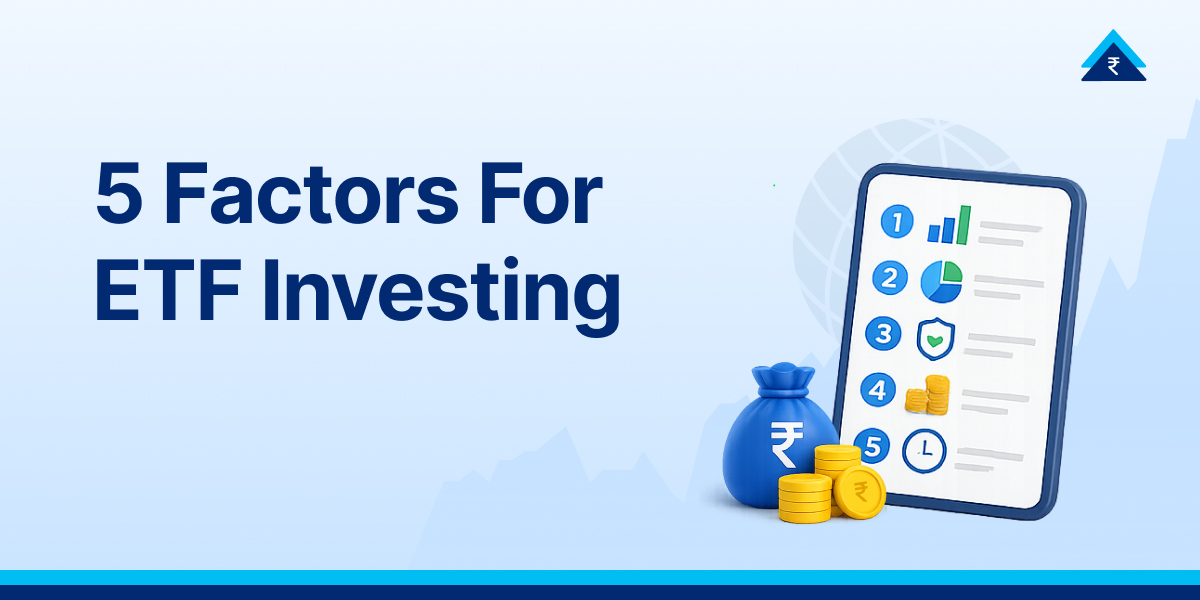
This ETF investment guide for beginners walks you through the five most important factors to consider before investing in ETFs. Whether you’re figuring out how to invest in ETFs in India for the first time or just want a refresher, these are the things to check before buying an ETF that genuinely matter.
1. Measure the ETF’s Performance
When most people think about ETF performance, they assume it’s just about returns. But there’s a more important measure, and it’s called tracking error.
ETF Tracking Error Meaning
An ETF is designed to mirror an underlying index, like the Nifty 50 or Sensex. But it rarely matches the index perfectly. The gap between the ETF’s return and the index’s return is the tracking error. The smaller this gap, the better the ETF is doing its job.
Why does this happen? A few common reasons:
- Fund management costs eat into returns.
- Cash held by the fund earns less than the index components.
- Timing differences when the ETF rebalances its holdings.
Before investing, look up the ETF’s tracking error over the last one, three, and five years. A consistently low tracking error usually signals a well-managed fund.
2. Understand the ETF’s Underlying Index
Every ETF is built around an index, and choosing the right index is half the battle. There are hundreds out there, so the question becomes: which one fits your goal?
Here are some common ways investors use ETFs:
- Geographic exposure: Country-specific, regional, or global indices to spread your risk across borders.
- Sector focus: Technology, banking, renewable energy, consumer goods, or telecommunications, depending on where you see growth.
- Asset class access: Equities, fixed income, gold, real estate, or commodities.
If you’re new to this, start by asking what role the ETF plays in your portfolio. Is it your core holding or a satellite bet on a specific theme? That answer narrows your choices considerably.
Types of ETFs in India
| ETF Type | What It Tracks | Typical Use |
|---|---|---|
| Equity ETFs | Stock indices like Nifty 50 or Sensex | Broad market exposure |
| Sector ETFs | Specific industries (banking, IT, pharma) | Targeted sector bets |
| Debt ETFs | Government or corporate bonds | Stable income, lower risk |
| Gold ETFs | Physical gold prices | Hedge against inflation |
| International ETFs | Foreign indices like S&P 500 or Nasdaq | Global diversification |
| Smart Beta ETFs | Rule-based strategies (low volatility, value, etc.) | Factor-based investing |
3. Consider the ETF Structure
This is one of those things to check before buying an ETF that often gets overlooked. The structure of an ETF affects both its risk profile and its cost.
There are broadly two types:
- Physical ETFs: These actually hold the securities they track. Most ETFs in India are physical, and they’re generally considered straightforward.
- Synthetic ETFs: These use derivatives like swaps to replicate index performance. They can be more cost-efficient in some cases but come with counterparty risk.
For most retail investors in India, physical ETFs are the default and the safer bet. But if you’re exploring international ETFs, the structure becomes more important to verify.
4. Know When and How to Trade
This is where ETFs really stand apart from mutual funds.
ETF Liquidity and Trading Volume
ETFs trade on the stock exchange, just like shares. You can buy or sell them anytime during market hours, which gives you far more flexibility than a mutual fund that only prices once a day.
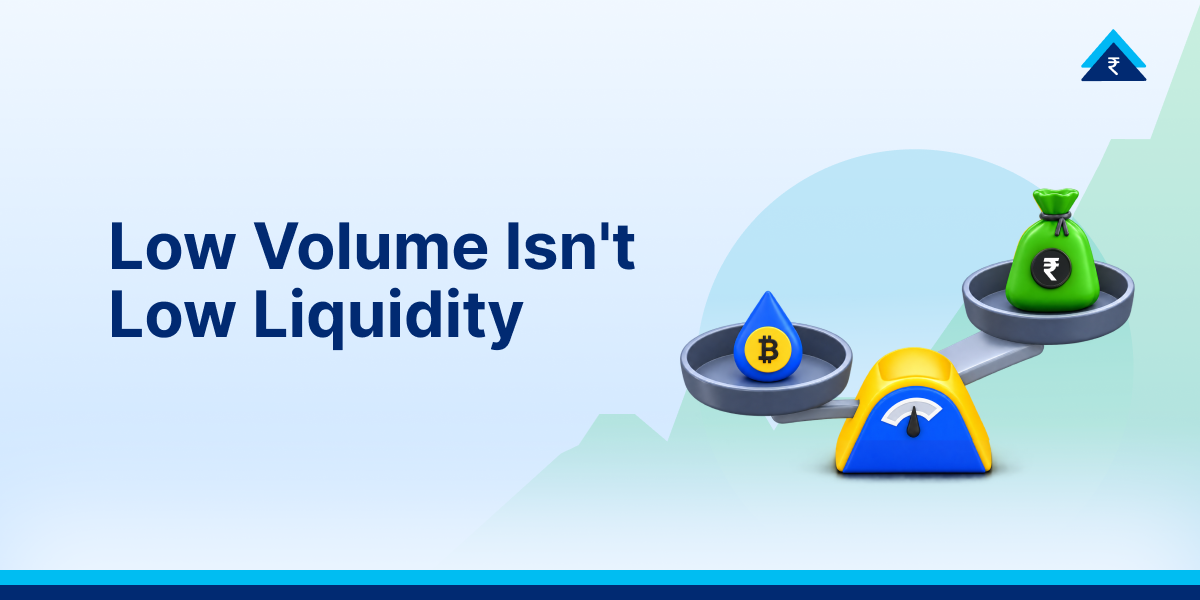
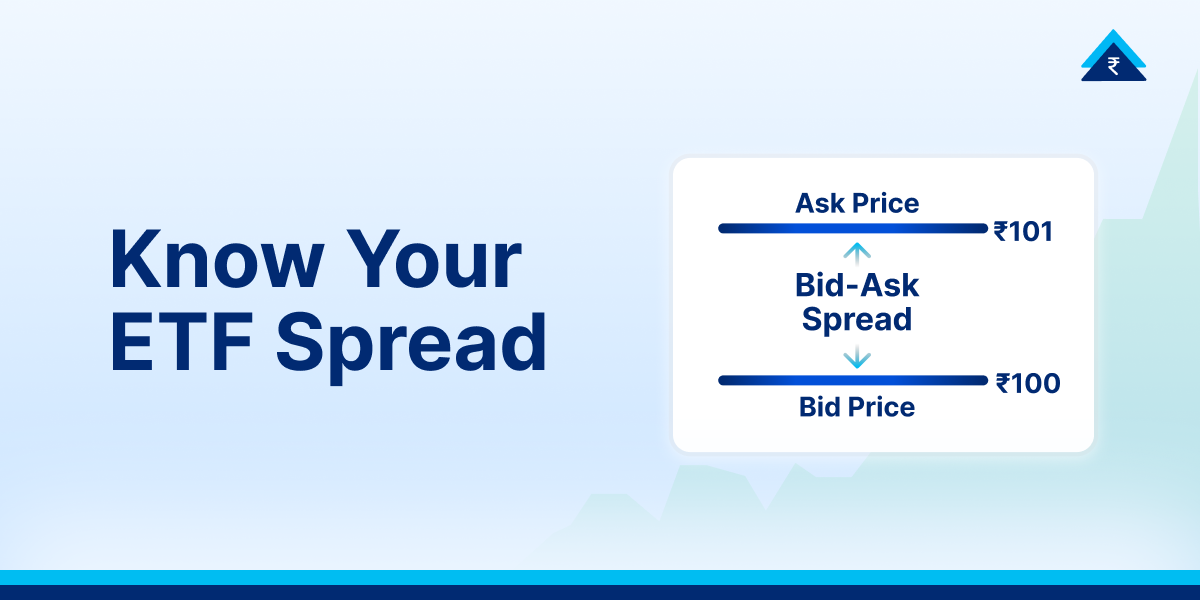
But flexibility means nothing if the ETF you want to trade has thin volumes. Low liquidity can mean wider bid-ask spreads, which quietly eats into your returns. Before buying, check the average daily trading volume and the bid-ask spread of the ETF.
Difference Between ETF and Mutual Fund
Here’s a quick comparison to clear up confusion:
| Feature | ETF | Mutual Fund |
|---|---|---|
| Trading | Throughout market hours | Once a day at NAV |
| Pricing | Real-time market price | End-of-day NAV |
| Expense Ratio | Generally lower | Generally higher |
| Demat Account | Required | Not required |
| SIP Option | Limited | Widely available |
Insight: Markets tend to be more volatile right after opening and just before closing. A common practice is to trade ETFs after the first 20 minutes and before the final 20 minutes of the trading day to avoid erratic price swings.
5. Understand the Total Cost
Costs in ETFs come from two main sources, and ignoring either can quietly chip away at your returns.
ETF Expense Ratio Explained
The expense ratio is the annual fee charged by the fund for managing the ETF. It’s expressed as a percentage of your investment. Indian equity ETFs typically have expense ratios between 0.05% and 0.50%, which is significantly lower than most active mutual funds. A lower expense ratio is almost always better, especially for long-term holdings where small percentages compound into meaningful sums.
Transaction Costs
Every time you buy or sell an ETF, you pay brokerage, STT, and other small charges. If you trade frequently, these add up fast.
Order Types: Choosing the Right One
| Order Type | Can Be Suitable For | Watch Out For |
|---|---|---|
| Limit Order | Price control over speed | May not execute if price isn’t reached |
| Market Order | Immediate execution | Realised price can vary in volatile markets |
| Stop Order | Protecting gains or limiting losses | Triggers as a market order, so price isn’t guaranteed |
| Stop-Limit Order | Combining triggers with price control | Order may not fully execute |
For volatile sessions, limit and stop-limit orders give you better price protection. Market orders are quick but risky when prices are swinging.
ETF Taxation in India
Taxation is another piece worth knowing before you invest:
- Equity ETFs: STCG taxed at 20% (held under 12 months), LTCG at 12.5% on gains above ₹1.25 lakh per year.
- Debt and gold ETFs: Generally taxed at slab rates if purchased after 1 April 2023.
Always factor tax into your net return when comparing options. For more detailed breakdowns, refer to current Income Tax Department guidance, since rates can change with each Budget.
ETF vs Index Fund Comparison
These two are often confused because they can track the same index. The key differences:
| Feature | ETF | Index Fund |
|---|---|---|
| Trading | Real-time on exchange | Once daily at NAV |
| Demat Account | Required | Not required |
| SIP | Less common | Widely available |
| Expense Ratio | Usually lower | Slightly higher |
If you prefer hands-off SIP investing, index funds are more convenient. If you want trading flexibility and lower costs, ETFs win.
Conclusion
These five factors to consider before investing in ETFs give you a solid foundation, but they aren’t the whole story. It’s also worth looking at:
- The ETF provider’s reputation and track record.
- The size of the fund (very small ETFs can carry liquidity risks).
- How long the ETF has been around.
- The provider’s commitment to the ETF business.
The best ETFs to invest in India are the ones that match your goals, not just the ones with the highest past returns. Take time to read the scheme document, understand what the ETF actually holds, and check whether it fits your overall plan.
A bit of research now saves a lot of regret later, and that’s true whether you’re investing ₹500 or ₹5 lakh.
Disclaimer: Investments in the securities market are subject to market risks, read all the related documents carefully before investing. This content is purely for information purpose only and in no way to be considered as an advice or recommendation. The securities are quoted as an example and not as a recommendation.
Investors are requested to do their own due diligence before investing. Paytm Money Ltd SEBI Reg No. Broking – INZ000240532, Depository Participant – IN – DP – 416 – 2019, Depository Participant Number: CDSL – 12088800, NSE (90165), BSE (6707) Regd Office: 136, 1st Floor, Devika Tower, Nehru Place, Delhi – 110019. For complete Terms & Conditions and Disclaimers visit: https://www.paytmmoney.com/stocks/policies/terms .