


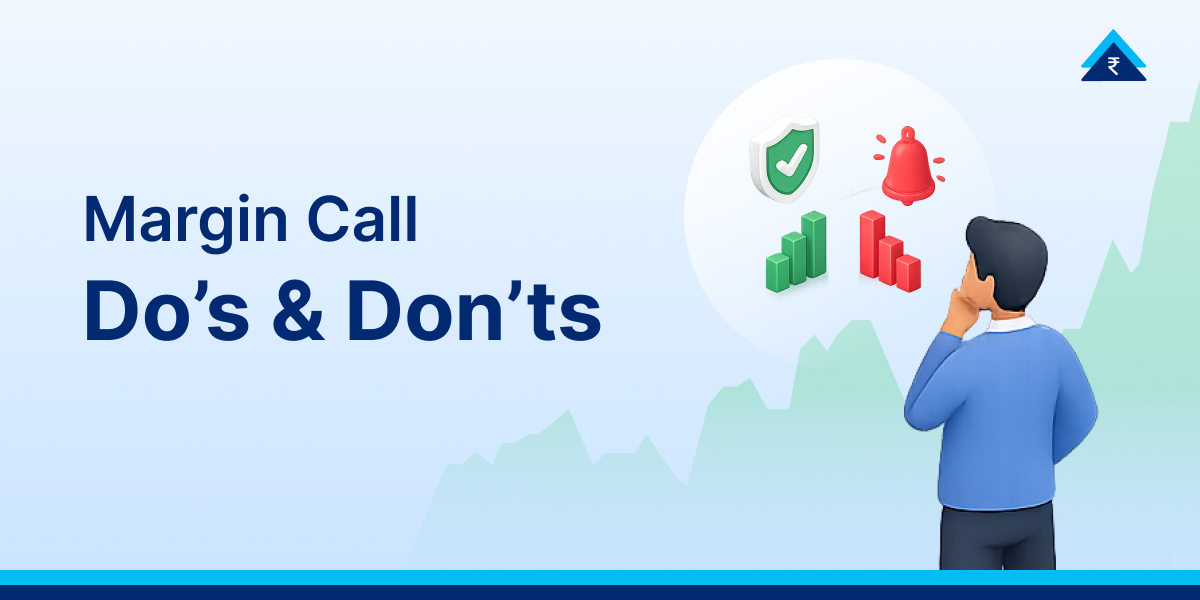
Imagine a busy trading day. The market is volatile, opportunities are surfacing, and you’re busy trading. Suddenly, you see an urgent notification, SMS, or email from your broker with the subject line: “Margin Shortfall Alert” or “Action Required: Margin Call.” For many traders, especially those relatively new to using leverage in their trading strategy, those two words—Margin Call—can induce immediate panic. Your heart races, you start wondering if you owe massive debts, and, in the urgency, you might be tempted to make impulsive decisions out of fear. But wait.
- What Exactly is a Margin Call?
- Why Did I Get a Margin Call? (The Common Triggers)
- 1. A Drop in the Stock Price
- 2. Revision in Exchange Haircuts
- How to Handle a Margin Call: A Step-by-Step Guide
- Step 1: Don’t Panic, But Act Fast
- Step 2: Understand the Exact Shortfall Amount
- Step 3: Choose Your Resolution Strategy
- Step 4: Verify the Resolution
- What Happens If You Ignore a Margin Call?
- How to Avoid Margin Calls in the Future
- 1. Maintain a Cash Buffer
- 2. Religiously Use Stop-Loss Orders
- 3. Avoid Highly Volatile Stocks for MTF
- 4. Monitor Your Portfolio Daily
- Key Takeaways
- Conclusion
- FAQs
First, take a deep breath. Getting a margin call is not the end of your trading journey. It is a standard, mechanical alert built into the financial system to protect both you and your broker from excessive risk. If you understand how to handle a margin call, it simply becomes another routine aspect of active portfolio management.
In this comprehensive guide, we will break down exactly what a margin call is, the mathematics behind why you received one, and most importantly, a step-by-step action plan to resolve it effectively and protect your capital.
What Exactly is a Margin Call?
To understand a margin call, you first need to understand how margin trading works. When you trade using margin, you are essentially borrowing funds from your broker to buy more shares than your cash balance would normally allow.
Think of it like buying a house with a mortgage. You put down a 25% down payment, and the bank covers the remaining 75%. The house acts as collateral for the loan. Similarly, in stock markets, the shares you buy (and any other securities you pledge) act as collateral for the funds the broker lends you.
| Margin Trading Facility (MTF): A facility offered by brokers that allows you to buy stocks by paying only a fraction of the total trade value upfront (the margin), while the broker funds the rest. It acts as a multiplier for your purchasing power. |
However, the stock market is volatile. If the price of the stock you bought drops significantly, the overall value of your collateral shrinks. The broker still needs to ensure that the loan is secure. Exchanges and brokers have strict rules about the minimum amount of value—or “equity”—that must be maintained in your account relative to the loan amount.
When your account equity dips below this mandatory maintenance margin requirement, the broker issues a Margin Call. It is simply a demand for you to deposit additional money or securities into your account to bring your margin back up to the required minimum level.
| Maintenance Margin: The minimum amount of equity (cash or pledged stock value) that an investor must maintain in their margin account after making a purchase. If the account value falls below this level, a margin call is triggered. |
Why Did I Get a Margin Call? (The Common Triggers)
Margin calls do not happen randomly. They are mathematically triggered by specific events in your portfolio or the broader market. The two most common reasons include:
1. A Drop in the Stock Price
This is the most frequent culprit. Let’s say you have ₹25,000 and use 4x leverage via MTF to buy ₹1,000,000 worth of ABC stock. The broker funds ₹75,000.
If the stock drops by 15%, your total position is now worth ₹85,000.
The broker’s loan of ₹75,000 remains constant, meaning your actual equity in the trade has shrunk from ₹25,000 to just ₹10,000. Because your equity has fallen below the broker’s required safety threshold for that specific stock, a margin shortfall occurs.
2. Revision in Exchange Haircuts
Sometimes, your stock price hasn’t moved much, but you still get a margin call. This happens when the stock exchange increases the “haircut” on the stock you are holding as collateral due to increased market volatility.
| Haircut: A percentage deduction applied by the stock exchange on the value of collateral. For example, if a stock has a 20% haircut, pledging ₹100 worth of that stock will only give you ₹80 in usable margin. |
If a stock becomes highly volatile, the exchange might increase its haircut from 20% to 30%. Suddenly, the collateral you pledged is less than required, causing an instant margin shortfall in your account.
How to Handle a Margin Call: A Step-by-Step Guide
If you have just received a margin call, time is of the essence. You usually have a very limited window (often just a few hours or until the end of the trading day/next morning) to resolve it. Here is how to handle a margin call efficiently.
Step 1: Don’t Panic, But Act Fast
Emotional decisions lead to financial mistakes. A margin call is a math problem, not a personal failure. Do not ignore the notification, hoping the market will magically rebound. Acknowledge the shortfall and log in to your Paytm Money app or web dashboard immediately to assess the exact deficit.
Step 2: Understand the Exact Shortfall Amount
Check your funds or margin statement. Identify exactly how much money you are falling short by. Is it a minor deficit of ₹5,000, or a major gap of ₹50,000? Knowing the precise number allows you to choose the most efficient resolution method.
Step 3: Choose Your Resolution Strategy
You have three primary ways to satisfy a margin call. You can use one or a combination of them:
Option A: Add Fresh Funds (Pay-in)
This is the simplest and most highly recommended way to handle a margin call. By transferring cash from your linked bank account into your trading account, you instantly increase your equity and cover the shortfall.
Pro-Tip: Always keep a buffer of liquid cash in your savings account, specifically for moments like this, if you trade on leverage.
Option B: Pledge Additional Holdings
If you do not have liquid cash available but you hold other eligible delivery shares or mutual funds in your Demat account, you can pledge them.
Pledging is the process of using your existing Demat holdings (stocks, ETFs, or mutual funds) as collateral to get margin funding, without actually selling those holdings.
By pledging fresh assets, you increase your collateral value, which satisfies the broker’s margin requirement. Just remember that pledging can take a little time to process (involving OTP authorization via CDSL/NSDL), so initiate it immediately. Know more about Margin Pledge.
Option C: Square Off (Sell) Some Positions
If you cannot add cash and have no additional shares to pledge, your only remaining option is to sell part of your holdings. By squaring off a portion of your MTF position, you reduce the size of the loan and lower the margin requirement. While it hurts to book a loss, cutting your position size is a prudent risk management strategy that protects you from further downside.
Step 4: Verify the Resolution
Once you have added funds, pledged shares, or sold positions, check your margin status again. Ensure the shortfall is cleared and your account is back in the green.
What Happens If You Ignore a Margin Call?
Ignoring a margin call is the worst possible action you can take. It will not simply disappear.
If you fail to bring your account balance up to the required maintenance margin within the stipulated timeframe, your broker will trigger an Auto Square-off.
If an auto square-off is triggered, the broker will sell your stocks at the current market price. You have zero control over which stocks are sold or the price at which they are executed. If the market is crashing, your shares might be sold at the absolute bottom, locking in your losses permanently. Furthermore, you will still be liable for any remaining debit balance, interest, and brokerage charges.
Do note that the broker is legally obligated and authorized to take action to protect the funded capital.
How to Avoid Margin Calls in the Future
While handling a margin call properly is an important skill, preventing them altogether is the mark of an experienced trader. Here are robust strategies to keep margin shortfalls at bay:
1. Maintain a Cash Buffer
Never utilize 100% of your available margin. If you have ₹1 Lakh in capital and your broker offers 4x leverage, giving you ₹4 Lakhs in buying power, do not buy ₹4 Lakhs worth of stock. Buy ₹3 Lakhs worth of stock by putting up ₹75,000 of your capital, and keep the remaining margin as a shock absorber against market volatility.
2. Religiously Use Stop-Loss Orders
When trading on margin, capital protection is your highest priority.
A Stop-Loss is an advance order placed with your broker to sell a stock automatically when it reaches a specific, predetermined price, effectively capping your potential loss on a trade.
By placing a strict stop-loss, you ensure that a losing trade is closed before the losses accumulate enough to trigger a massive margin call.
3. Avoid Highly Volatile Stocks for MTF
Leverage amplifies volatility. If a stock routinely swings 5% to 10% in a single day, it is highly prone to triggering margin calls. Reserve MTF for high-conviction, fundamentally strong stocks with predictable price action and high liquidity.
4. Monitor Your Portfolio Daily
MTF is not a “buy and forget” tool. The interest on the borrowed amount accrues daily, and margin requirements can change swiftly. You must monitor your MTF positions closely every single trading day. Use tools like the Paytm Money MTF Calculator to estimate your holding costs and margin requirements upfront before entering a trade.
We send a Daily MTF Report to your email with the necessary details regarding your MTF positions.
Key Takeaways
- A margin call is a safety mechanism: It is a broker’s request for you to add funds or collateral when your account equity falls below a required threshold.
- Time is critical: Margin calls must be resolved quickly, usually within the same trading day or by the next morning.
- Three ways to resolve: You can handle a margin call by adding fresh cash, pledging additional eligible Demat holdings, or selling off part of your position.
- Never ignore it: Ignoring a margin call leads to an auto square-off, where the broker forcibly sells your assets at market price, removing your control over the trade.
- Prevention is the best cure: Maintain a cash buffer, avoid maximizing your leverage limits, and always trade with strict stop-losses to prevent shortfalls.
Conclusion
Leverage is a double-edged sword. While facilities like MTF-Pay Later are incredible tools for amplifying your purchasing power and capturing short-term market opportunities, they require a high degree of discipline. Receiving a margin call is simply the market’s way of testing that discipline.
By understanding how to handle a margin call—assessing the deficit quickly, adding funds or collateral, or gracefully cutting position size—you shift from a state of panic to a state of control. Remember, successful trading is not just about picking the right stocks; it is about impeccable risk management. Trade wisely, keep your buffers robust, and let your capital work efficiently for you.
Disclaimer: Investments in the securities market are subject to market risks, read all the related documents carefully before investing. This content is purely for information purpose only and in no way to be considered as an advice or recommendation. The securities are quoted as an example and not as a recommendation.
Investors are requested to do their own due diligence before investing. Paytm Money Ltd SEBI Reg No. Broking – INZ000240532, Depository Participant – IN – DP – 416 – 2019, Depository Participant Number: CDSL – 12088800, NSE (90165), BSE (6707) Regd Office: 136, 1st Floor, Devika Tower, Nehru Place, Delhi – 110019. For complete Terms & Conditions and Disclaimers visit: https://www.paytmmoney.com/stocks/policies/terms .